Sustainable Design Solutions For The Ezba Slum Community
How might we support the local informal economy at Ezba slum to help the community lead healthier, more educated and dignified lives?
Background
Ezbet Abu Qarn is one of the oldest and largest informal settlements in the MENA region, spread over an area of 11 hectares in Old Cairo and bordering the ruins of El Fustat in the south (which served as the capital of Egypt for 500 years between 7th and 12th century AD). The United Nations Human Settlements Programme [UN-Habitat] defines a slum household as one that lacks one or more of the following:
1. Access to improved water
2. Access to improved sanitation
3. Security of tenure
4. Durability of housing
5. Sufficient living area
With a population of 12 million and a struggling economy, the residents of Ezba face all of those problems and more.
The Story
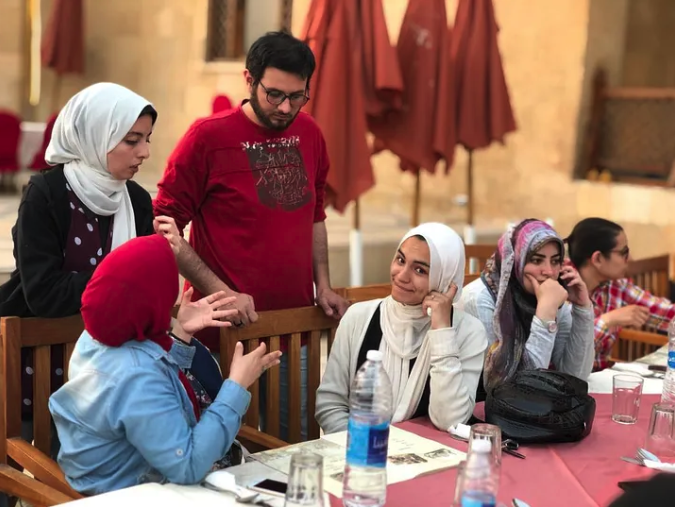
Ycenter’s team had flown down from Mumbai to Cairo to lead a Ycenter Sustainable Design bootcamp in association with FabLab Egypt, AYB’s Ain Shams University (ASU) branch and Giza Systems Education Foundation. The project brought together 28 engineers, social volunteers, product designers and education specialists from Egypt and Saudi Arabia.
Our mission was to learn, research, analyze and design solution prototypes for the Ezbet Abu Qarn slum community over a period of 10 intense days. We were tackling UN SDG-based problem statements including “How might we foster an economy that encourages local craftsmanship” to “How might we reduce youth illiteracy by providing accessible education to mothers” to “How might we reduce electronic waste accumulation through community-driven recycling techniques”.
Ycenter’s modular pedagogy (think Lego, but for education) enabled us to have instructions and content translated live from English to Arabic without any loss in impact (or humour). Upholding our philosophy of a global classroom experience, the participants also connected live with students at a parallel Ycenter Design Thinking workshop happening half-way across the world at Queens College City University of New York — exchanging project insights and learning.
The result was a multicultural exercise in building empathy and looking at familiar problems from a whole new perspective.
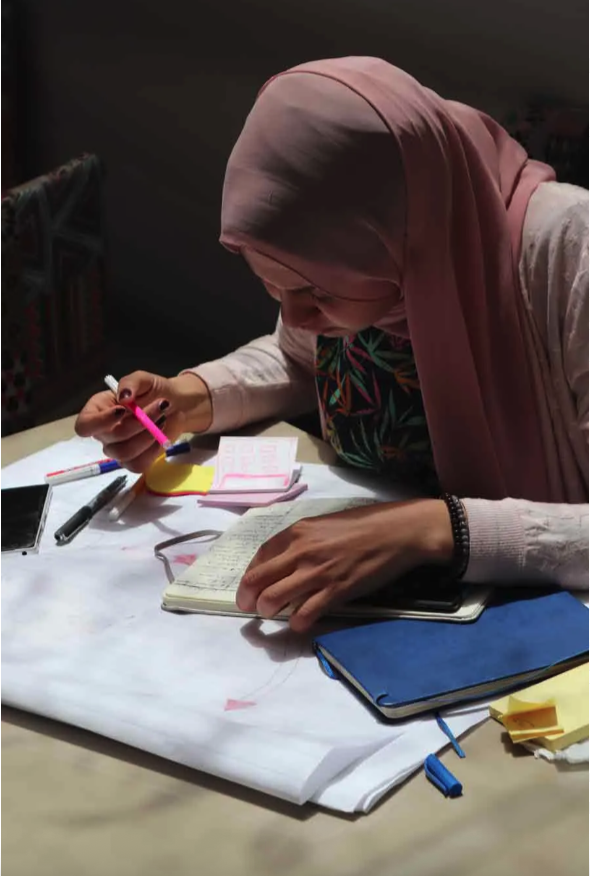
The team often worked 12-hours a day for 10 days straight, making the studio our home, to produce the project blueprints.
The solutions were designed after considering stakeholder feedback early into the prototyping process though 1st-person interviews with the Ezba slum residents — designing with the people instead of for the people.
Edu-vision
Illiteracy cannot be solved unless mothers champion education. With that core insight, the team consisting of Akram, Lamia, Ahmed and Mostafa built an education program that connects literate mothers with illiterate mothers and provides peer-to-peer community learning opportunities to solve the problem of their children dropping out of school.
The Can-do Wire Splitter
To help cut down air pollution due to burning of cables, the team consisting of Hegazy, Dawood, Shimaa and Yara created the blueprint for a portable, hand-operated wire shredder that splits the inner copper mesh from the plastic / rubber coating. The team also created a plan to educate people & recycle the cable components to ensure a circular economy.
Ezba marketplace
Ezba has a prominent but financially struggling handicrafts community. Since most of the Ezba economy is still based on the barter system in the absence of liquid cash, the team consisting of Ishaq, Nagwa, Okasha and Mansour created a model for a peer-to-peer open marketplace based on a decentralized, oine token-based currency inspired by Blockchain to showcase and support the local culture and its artisans & vendors. The model also accounted for a community center in the middle of the market for kids and events
Circle back to our alumni doing cool things
July 2019 - Three months after the completion of the bootcamp at the Fab 15 International Conference in El Gouna by the Red Sea in Egypt. Our team chanced upon the Fab Lab On Wheels — a minivan retrotted with fabrication equipment to turn it into a moving maker lab. Ishaq Mohamed, an engineer and ex-participant from the bootcamp’s Ezba Marketplace team, had an ear-to-ear grin as he showed us around the van.