
Building Enterprise AI solutions faster than Enterprises can
Ycenter partnered with the Rotman School of Management and Siemens to turn a classroom into an Innovation Lab. In just 8 weeks, we deployed our C.A.S.E. framework combined with Prof.Bo Pelech’s leadership to build a Custom GPT that solved a complex Channel Management problem.

The "Black Box" of Channel Partners
The Context
Siemens NX is a powerhouse in engineering software. But like many enterprise giants, they faced a visibility crisis with their Channel Partners (indirect sellers).
The Challenge
While Siemens controlled the product, the partners controlled the customer relationship. Data was fragmented across disconnected systems, incentives were misaligned, and visibility into execution was low.Traditional dashboards were failing. They provided "Awareness" (showing a number went down) but not "Action" (telling the partner what to do about it). Siemens needed a way to influence partner behavior without micromanaging them.
Defining the Problem with C.A.S.E.
You cannot solve a problem you cannot define.
Professor Bo Pelech’s course, "Applied AI for Enterprises," focuses on tackling messy, real-world ambiguity. But students aren't industry veterans. They needed a translation layer.
Ycenter stepped in as the Innovation Architect. Using our proprietary C.A.S.E. methodology, we worked with Siemens executives to slice their massive operational headache into 3-4 distinct problem statements. We converted vague corporate pain points into structured challenges that students could attack.
The Customer Success GPT
Over 8 weeks, the student teams didn't just write papers; they built a functioning Custom GPT designed to act as a "Super-Analyst" for Channel Managers.
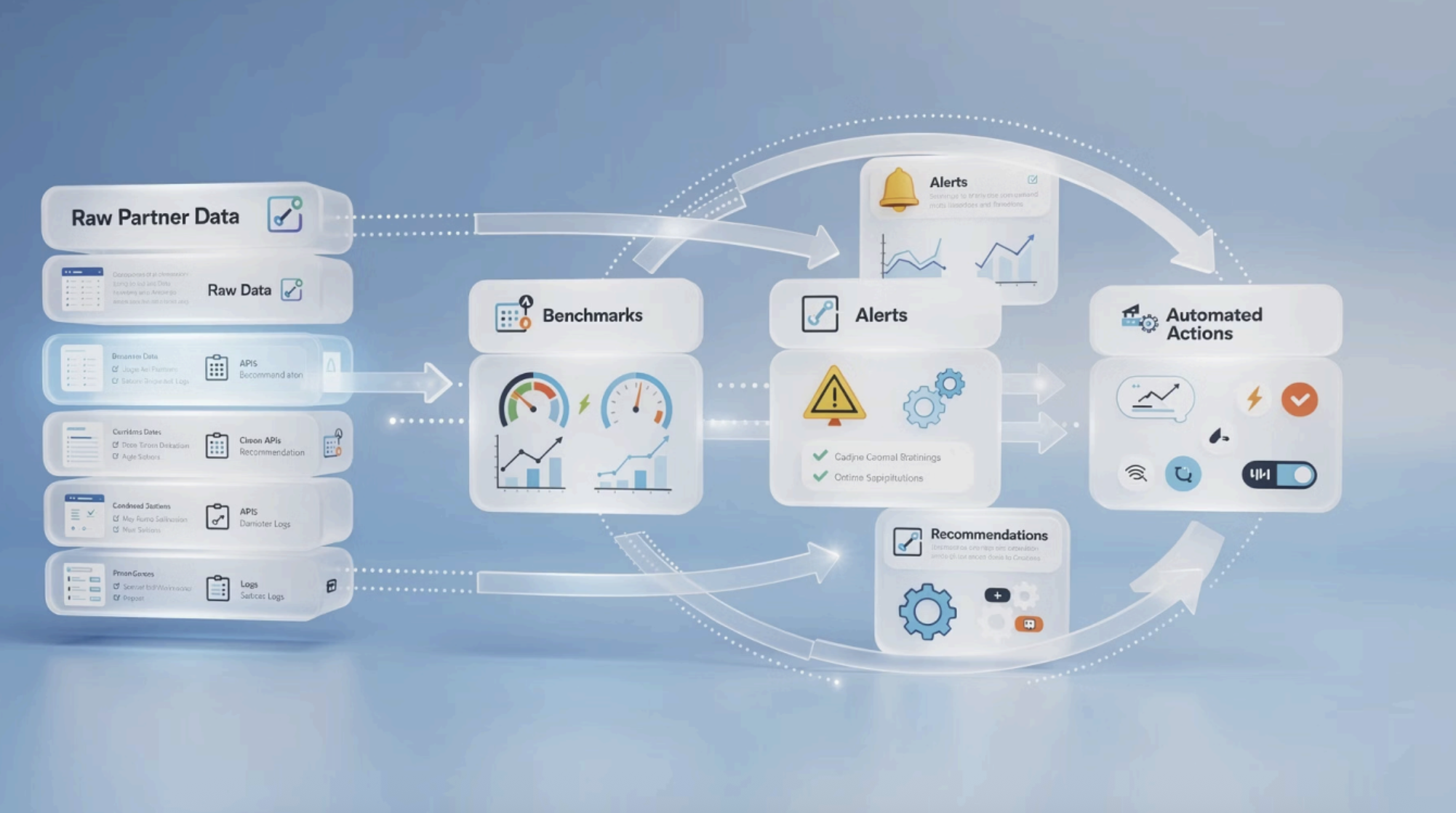
The value of this GPT is not data aggregation, it is translation into action.
The Architecture
Instead of a generic chatbot, the solution was built on 7 Modular Building Blocks, mirroring the actual lifecycle of a client (Licensing, Onboarding, Renewal, etc.).
“I was pleasantly surprised by the amount of depth and research the students undertook for this exercise. The presentation of the problem statement and issue resolution paths were on par with what we would do in the industry on a large scale and most importantly the students asked the right questions to reaffirm their findings to close the gap.”
The AI Logic
The system ingested raw, messy partner data and converted it into three outputs:
1. Benchmarks: Comparing partners against peers to create "implicit peer pressure"
2. Alerts: Identifying churn risk before it happened
3. Action: Auto-drafting emails and specific "Next Best Actions" for the account manager
“I am amazed the quality of product and speed of delivery by students from Rotman. Prof.Bo is merging Venture Studio model with Technology Building right inside his class while providing real world experience to his students.”
From "Reporting" to "Nudging”
The project proved that AI's true value isn't just aggregating data—it's shaping behavior.
Proactive
Influence
Moved Siemens from reactive oversight to proactive influence, creating standardized playbooks for onboarding and renewal.
Validation
Academic Rigor
Demonstrated that MBA students can tackle "synthetic but structurally realistic data" to produce enterprise-grade prototypes.
Scale
Operational Best Practices
Created a system to operationalize best practices across the ecosystem without adding headcount.
If you are a Business or a High Impact Organization, looking to collaborate with us for building highly scalable application with enterprise security and data privacy, check out this page.